26 obchodů · 109 188+ produktů

Porovnání: Michelin CrossClimate 3 vs. Pirelli Cinturato All Season SF3 (2026)

1 společných testů s podrobnými daty

Pirelli masters every wet and dry test; Michelin rules snow and outlasts everything.

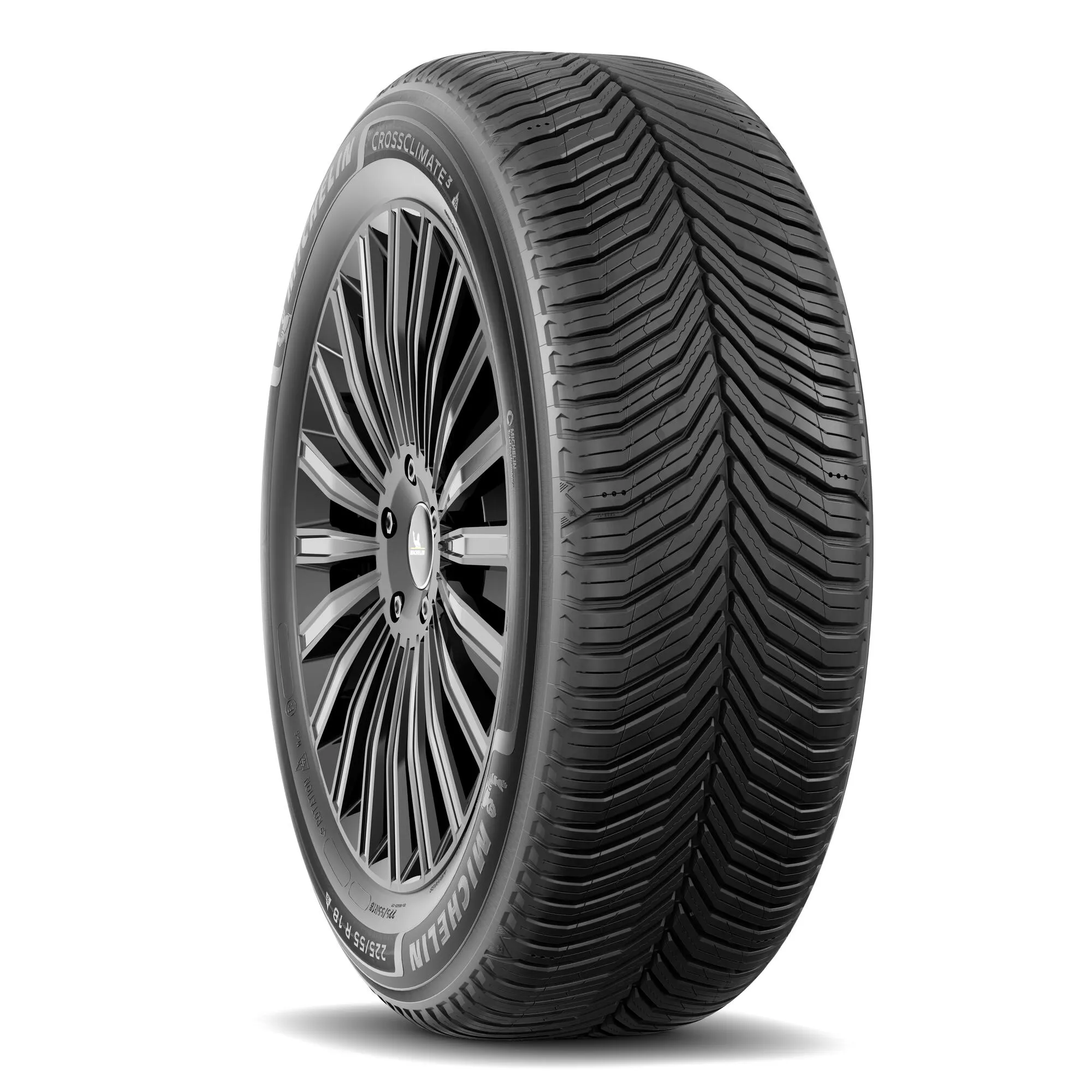
Two premium all-season tyres from two of Europe's most storied tyre houses, yet they could hardly be more different in character. The Michelin CrossClimate 3 is Michelin's flagship four-seasons answer for everyday drivers who want genuine winter credibility without the hassle of a seasonal swap. Built around a V-shape tread sculpture and the brand's proprietary Thermal Adaptive Tread Compound, it arrives with 3PMSF certification, EV compatibility across a broad 79-size range spanning R16 to R22, and a 4.8/5 rating from over 1,100 real-world owners. Michelin markets it as an 'all-season multi-tasker' promising safety and confidence in every condition — language that, as the test data will show, is more accurate in some conditions than others.

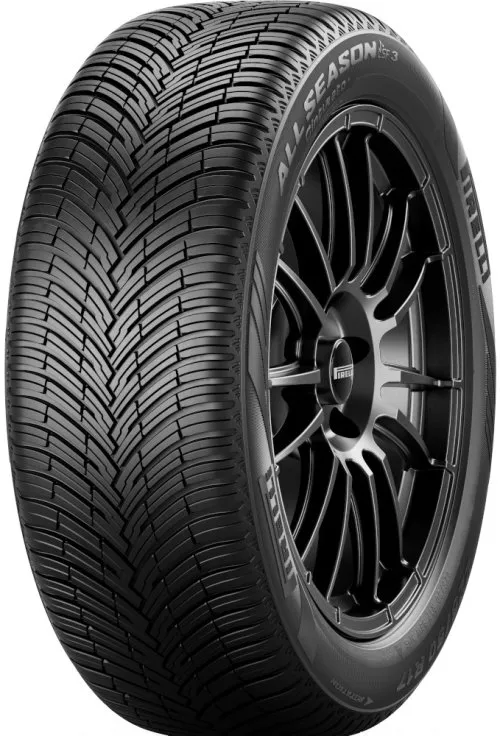
The Pirelli Cinturato All Season SF3 is the third generation of Pirelli's Cinturato all-season line, succeeding the SF2 with what amounts to a genuine leap forward rather than a refresh. Where the CrossClimate 3 wears its winter credentials most prominently, the SF3 arrives with a far more ambitious brief: to behave like a summer tyre on dry tarmac while remaining fully competent on snow and ice. It covers 67 sizes from R15 to R20, and our overall rating of 95/100 reflects a tyre that comprehensively outperformed its rivals in the most recent comparative tests.

The single biggest character difference between them comes down to priority. The CrossClimate 3 is a snow specialist with excellent longevity and fuel efficiency — a tyre optimised for winter credibility and long-term running costs. The SF3 is a dynamic all-rounder that treats dry and wet tarmac as primary disciplines and brings genuine sporting intent to the all-season category. Drivers who regularly face serious winter conditions will find the Michelin compelling; everyone else will find the Pirelli a significantly more capable tyre across the full range of conditions they actually encounter.

Michelin CrossClimate 3
Vhodná pro
Drivers in northern Europe with severe winters High-mileage commuters prioritising running costs Fuel-conscious drivers seeking low rolling resistance EV owners needing a wide size range
Méně vhodná pro
Drivers prioritising wet and dry braking performance Those wanting engaging, sporty dry handling Buyers in warm climates with minimal winter
Pirelli Cinturato All Season SF3
Vhodná pro
Spirited drivers wanting summer-like dry dynamics Safety-focused drivers in wet climates Year-round mixed-condition drivers in mild winters Drivers prioritising best-in-class aquaplaning resistance
Méně vhodná pro
Drivers in heavy, prolonged snow regions High-mileage drivers watching total cost of ownership Budget-conscious buyers wanting the longest tread life

Testovací profil

Michelin
CrossClimate 3
Pirelli
Cinturato All Season SF3
Počet testů
2
16
Nejlepší umístění
#7
#1
Průměrná pozice
9.0
1.7
Nejnovější test
2025
2026
Dostupné velikosti
132
73

Porovnání výkonu

Výkon na mokru
Confidence
Michelin CrossClimate 3
66%
Michelin
CrossClimate 3
Pirelli Cinturato All Season SF3
87%
Pirelli
Cinturato All Season SF3
Brzdění na mokru
Michelin CrossClimate 3
69%
Pirelli Cinturato All Season SF3
84%
Ovladatelnost na mokru
Michelin CrossClimate 3
65%
Pirelli Cinturato All Season SF3
81%
Zatáčení na mokru
Michelin CrossClimate 3
59%
Pirelli Cinturato All Season SF3
84%
Akvaplanace podélná
Michelin CrossClimate 3
69%
Pirelli Cinturato All Season SF3
92%
Akvaplanace příčná
Michelin CrossClimate 3
69%
Pirelli Cinturato All Season SF3
92%

Wet-weather performance is where the SF3's dominance becomes most decisive and most practically important. In the single measured wet braking test, the Pirelli stopped in 46.3 metres against the Michelin's 49.0 metres — a 2.7-metre gap that represents roughly 0.12 extra seconds of stopping time from 80 km/h. In a real emergency on a rain-soaked urban road, that margin can be the difference between a clean stop and a collision. The performance score gap is even more revealing: Pirelli wet braking at 88.8 against Michelin's 69, and overall wet scores of 90.5 versus 67. Michelin's own marketing claims a 4% improvement in wet braking versus its predecessor, which underlines just how competitive this segment has become — even an improved Michelin is a full class below the Pirelli in wet stopping performance.

The aquaplaning data makes the structural advantage of the SF3 even clearer. Pirelli's aquaplaning score of 93 — with 92.9 longitudinally and 92.0 in cross-aquaplaning — is among the best in the all-season category. The CrossClimate 3 scores 69 overall for aquaplaning, a significant shortfall that reflects differences in drainage channel architecture and compound compliance at speed on standing water. On a motorway in heavy rain at 110 km/h, this translates to a meaningfully higher speed threshold before the Pirelli's steering starts to float — an important safety margin that the Michelin simply cannot match. Owner feedback from Pirelli users on wet roads is enthusiastic, with multiple reviewers noting that wet grip feels closer to a summer tyre than they expected from an all-season product.

Wet handling completes the picture. The SF3's wet-handling score of 90.1 and wet-circle cornering score of 88 place it at the top of the all-season segment in these disciplines, with testers consistently noting that the tyre's feedback through the steering in wet corners is unusually communicative and confidence-inspiring. The CrossClimate 3, while not unsafe in wet conditions, operates in a noticeably different performance band — it is competent rather than capable, reassuring rather than dynamic. For the majority of European drivers who face far more wet tarmac than snow each winter, this is the most consequential difference in this comparison.

Výkon na suchu
Confidence
Michelin CrossClimate 3
72%
Michelin
CrossClimate 3
Pirelli Cinturato All Season SF3
85%
Pirelli
Cinturato All Season SF3
Brzdění na suchu
Michelin CrossClimate 3
73%
Pirelli Cinturato All Season SF3
91%
Ovladatelnost na suchu
Michelin CrossClimate 3
71%
Pirelli Cinturato All Season SF3
79%

On dry tarmac, the gap between these two tyres is not subtle. In the one shared test with measured braking distances — the Autobild 2025 225/40 R18 comparative — the Pirelli Cinturato All Season SF3 stopped in 38.0 metres while the Michelin CrossClimate 3 needed 40.4 metres: a 2.4-metre deficit that translates to roughly half a car length at 100 km/h. In the same 30-tyre braking shootout, the SF3 finished 3rd while the CrossClimate 3 came 11th. That ranking gap is almost as telling as the distance, because it positions the Michelin squarely in the middle of the all-season field rather than among its leaders. The dry braking performance scores reinforce this picture starkly: 94.5 for the Pirelli against 73 for the Michelin — a 21-point chasm that reflects a fundamental difference in compound and tread design priorities.

The Pirelli's dry behaviour goes far beyond braking, however. Its dry-handling objective score — the metric that captures how precisely a tyre follows the driver's intended line through a measured circuit — sits at a perfect 100, matching the very best summer tyres in this dimension. Testers across multiple evaluations described the SF3 as producing direct, communicative steering response and sporting handling quality, with traction and cornering grip reserves that outpace typical all-season expectations. This is a tyre that makes a driver feel genuinely connected to the road on a sweeping A-road, not merely competent. The CrossClimate 3, by comparison, is a composed and stable dry performer but lacks that last layer of incisiveness — it is safe and predictable rather than engaging, which is entirely appropriate for its target audience of everyday all-weather commuters.

One nuance worth noting: a Scandinavian test flagged reduced Pirelli dry grip in warmer conditions, and some owners report that the SF3's character changes slightly as ambient temperature rises. This is consistent with a compound optimised partly for cold-weather performance. In practice, for most northern and central European drivers, this thermal sensitivity is unlikely to manifest as a real-world problem — but it is worth keeping in mind for drivers in warmer southern markets who might find a summer tyre more appropriate for the majority of their driving anyway.

Výkon na sněhu
Confidence
Michelin CrossClimate 3
93%
Michelin
CrossClimate 3
Pirelli Cinturato All Season SF3
82%
Pirelli
Cinturato All Season SF3
Brzdění na sněhu
Michelin CrossClimate 3
92%
Pirelli Cinturato All Season SF3
69%
Trakce na sněhu
Michelin CrossClimate 3
92%
Pirelli Cinturato All Season SF3
84%
Ovladatelnost na sněhu
Michelin CrossClimate 3
96%
Pirelli Cinturato All Season SF3
81%
Kroužení na sněhu
Michelin CrossClimate 3
92%
Pirelli Cinturato All Season SF3
92%

Here is where the Michelin CrossClimate 3 reclaims the narrative entirely, and it does so by a margin that is genuinely impressive. With a snow performance score of 93.3, the CrossClimate 3 earned the title of 'Schneekönig' — snow king — in Autobild's 2025 test, with testers noting that its snow handling and traction capabilities can rival dedicated winter tyres. This is an extraordinary claim for any all-season tyre, and the test data supports it. For drivers in Scandinavia, the Alps, or anywhere that sees regular snowfall and sub-zero temperatures from November to March, this advantage is the single most compelling argument for choosing the Michelin.

The Pirelli Cinturato All Season SF3 is, it must be said, no failure in winter conditions. With a snow score of 84.3, 3PMSF certification, a snow-handling objective score of 98, snow traction of 90.1, and snow circle cornering at 90.2, this is a tyre with real winter competence — and testers acknowledged reliable behaviour on snow and ice across multiple evaluations. A Volkswagen Golf owner with 8,000 km on the SF3 described the snow grip as 'more than enough'. But the 9-point gap in overall snow score between the two tyres is meaningful, and it appears most acutely in snow braking, where the Pirelli's slightly longer stopping distances were flagged in multiple tests. The Michelin is simply built with winter as a primary design discipline; the Pirelli treats snow as a genuine secondary capability rather than a core specialism.

For drivers who genuinely need an all-season tyre to serve as a true winter rubber substitute — and who live where that is a regular reality rather than an occasional inconvenience — the CrossClimate 3's snow superiority is worth the trade-offs elsewhere. Both tyres carry the 3PMSF mountain-snowflake symbol, confirming certified severe-weather performance, but the Michelin backs that symbol up with test scores that comfortably lead the category. The practical implication is clear: on a snow-covered motorway at dawn, or navigating a mountain pass in February, the CrossClimate 3 inspires the kind of confidence that the SF3, despite its merits, cannot fully replicate.

Komfort a hluk
Confidence
Michelin CrossClimate 3
77%
Michelin
CrossClimate 3
Pirelli Cinturato All Season SF3
81%
Pirelli
Cinturato All Season SF3
Vnější hluk
Michelin CrossClimate 3
75%
Pirelli Cinturato All Season SF3
84%
Jízdní komfort
Michelin CrossClimate 3
78%
Pirelli Cinturato All Season SF3
78%

In the comfort and refinement department, the Pirelli Cinturato All Season SF3 holds a modest advantage over the CrossClimate 3, though neither tyre is a standout in this area. The SF3 scores 82.8 for comfort and 76.4 for noise — both creditable figures for a tyre whose primary design focus is dynamic performance. The CrossClimate 3 scores 75 and 75 respectively, placing it a step behind on ride quality while remaining adequate for everyday use. Real-world owner feedback for the Michelin is broadly positive on comfort — one Skoda Scala driver praised ride quality and handling after switching from summer tyres — though the tyre's EU wet grip label of B (versus the Pirelli's predominantly A-rated performance) suggests some real-world differences in wet refinement as well. Neither tyre will embarrass itself on a long motorway run, but the SF3's marginally more refined character is another point in its favour for the majority of buyers.

Running costs, however, tell a very different story — and this is where the CrossClimate 3 makes its strongest case for value-conscious buyers. With a mileage score of 92 against the Pirelli's 60, the Michelin is expected to last dramatically longer on the road. The SF3 has been flagged for above-average wear — 'überdurchschnittlich hoher Verschleiß' — in multiple test years, and TyreReviews identified its mileage as 'the highest wear resulting in lowest overall value' among tested competitors. The gap here is not marginal: a 32-point difference in mileage score suggests the Michelin may outlast the Pirelli by a substantial margin over the lifetime of a set. Combined with the CrossClimate 3's rolling resistance score of 84 (against the SF3's 72.5) and real-world owner reports of improved fuel economy, the long-term cost of running the Michelin is likely to be noticeably lower. One owner specifically cited 'better fuel economy' as a benefit; another accumulated significant mileage across multiple vehicles while reporting sustained performance.

On price, both are positioned in the premium segment, but the Pirelli typically commands a premium — and given its lower mileage score, that premium becomes harder to justify on running-cost grounds alone. The SF3's EU fuel label skews slightly better (predominantly B-rated) than the CrossClimate 3's mixed B/C split, which partially offsets the rolling resistance difference, but the mileage gap dominates the total-cost-of-ownership calculation over a typical service life. Drivers who change tyres every 30,000 km will likely find the Pirelli's performance worth the additional outlay; drivers covering 50,000 km or more between replacements should factor in the very real possibility that the Michelin costs them significantly less per kilometre, even at a lower initial performance ceiling.

Ekonomika
Confidence
Michelin CrossClimate 3
88%
Michelin
CrossClimate 3
Pirelli Cinturato All Season SF3
65%
Pirelli
Cinturato All Season SF3
Valivý odpor
Michelin CrossClimate 3
84%
Pirelli Cinturato All Season SF3
84%
Spotřeba paliva
Michelin CrossClimate 3
87%
Pirelli Cinturato All Season SF3
60%
Počet najetých kilometrů
Michelin CrossClimate 3
92%
Pirelli Cinturato All Season SF3
51%

Graf výkonu (spider chart)

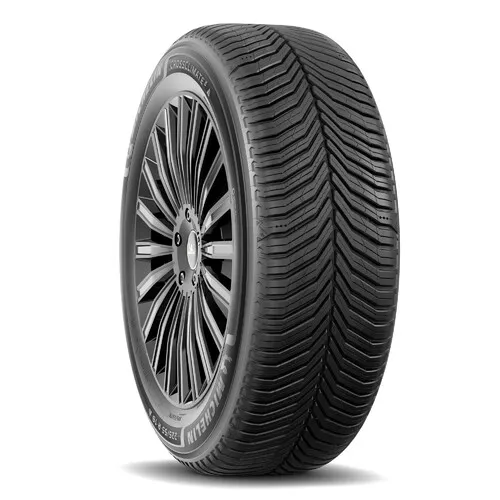
Tread pattern comparison

Michelin CrossClimate 3
Pirelli Cinturato All Season SF3
Drag to compare · Scroll to zoom · Double-click for 2×

Verdikt

Two shared tests, two Pirelli victories — and in the 15-tyre Autobild 2025 full test, the SF3 finished first overall (rated 'exemplary') while the CrossClimate 3 finished seventh (rated merely 'good'). That head-to-head record, combined with the performance score gaps in dry braking (94.5 vs 73), wet performance (90.5 vs 67) and aquaplaning (93 vs 69), makes a clear case: the Pirelli Cinturato All Season SF3 is the superior tyre for the vast majority of European drivers. Its combination of summer-tyre dry dynamics, class-leading wet braking, exceptional aquaplaning resistance and genuine snow competence makes it the most rounded all-season option available at this premium level. If you live in central or western Europe where winter means cold rain, occasional frost and perhaps a week of light snow, the SF3 covers every condition with a confidence and ability that the CrossClimate 3 cannot match.

The Michelin CrossClimate 3 belongs to a more specific driver profile. If your winters are genuinely severe — regular snowfall, sub-zero mornings measured in weeks, roads that stay white for months — the CrossClimate 3's snow score of 93.3 and its 'Schneekönig' credentials represent a genuinely compelling argument. It is also the right choice for high-mileage commuters who want to minimise total cost of ownership: its mileage score of 92 and strong rolling resistance figure mean that, over a full tyre lifecycle, it is likely to cost less per kilometre than the Pirelli despite occasionally matching or exceeding it on list price. Real-world owners report consistent performance over long distances and improved fuel economy — exactly the priorities the Michelin was designed to serve.

A final word on our ratings encapsulates this well: 95/100 for the Pirelli, 69/100 for the Michelin. That gap is not an error — it reflects genuine, data-backed differences in performance across the disciplines that matter most to most drivers, most of the time. The CrossClimate 3 is a fine tyre for a specific set of priorities. The SF3 is the better tyre for almost everyone else.

Testy použité v porovnání

OrganizaceSezónaRokRozměr
AutobildAutobild
Celoroční
2025225/40 R18Zobrazit

Rozměry a ceny

Porovnejte ceny ve všech dostupných rozměrech těchto pneumatik.

Rozměr Michelin CrossClimate 3 Pirelli Cinturato All Season SF3 %
205/55 R16
205/55 R16
205/55 R16
205/55 R16
205/55 R16
Zobrazit obecné srovnání

Přidat k porovnání

Oblíbené značky
Nové srovnání

TestPneumatik.eu

ZÍSKAT

TestPneumatik.eu

Porovnejte pneumatiky, přečtěte si výsledky testů a najděte nejlepší ceny — vše v jedné aplikaci.